
Gear Oil in Sudan: A Complete Guide to Types, Grades & Applications
Gear Oil in Sudan: A Complete Guide to Types, Grades, and Applications Discover More In the demanding and diverse climate of Sudan, from the arid

Ecol Lubricants
For any vehicle owner or fleet operator in Sudan, the phrase “transmission fluid” carries a weight far beyond a simple maintenance checklist item. It represents the vital lifeblood of your vehicle’s gearbox, a component whose health is critically challenged by the nation’s unique and demanding environment. Understanding what transmission fluid is, its specific function within the Sudanese context, and its undeniable necessity is not just about vehicle maintenance—it’s about economic preservation, safety, and reliability in a land of extreme conditions.
This article delves deep into the meaning of transmission fluid, why its selection and maintenance are non-negotiable in Sudan, and how overlooking this crucial fluid can lead to catastrophic failures.
At its core, transmission fluid is a specialized lubricant formulated to serve multiple critical functions within a vehicle’s transmission system, whether manual or automatic. However, calling it mere “oil” is a significant understatement. It is a complex, engineered hydraulic fluid with a very specific job description.
In essence, “transmission fluid in Sudan” refers to this sophisticated lubricant operating under one of the world’s most punishing automotive regimes. The meaning encompasses:
Heat Transfer Medium: It acts as a coolant, absorbing immense heat generated from gear friction and torque converter operation.
Hydraulic Pressure Agent: In automatic transmissions, it creates the fluid pressure necessary to actuate clutches and bands for gear changes.
Lubrication Film: It coats metal components (gears, bearings, shafts) to prevent wear and friction.
Cleaning and Protective Layer: It contains detergents and additives to keep sludge and varnish at bay and protect against corrosion.
The Sudanese context—characterized by searing ambient temperatures, pervasive dust and sand, and often challenging driving conditions—adds layers of complexity to this definition. Here, the fluid must retain its properties not under ideal laboratory conditions, but in an engine bay that regularly exceeds normal operating temperatures.
To comprehend the absolute necessity of proper transmission fluid care, one must understand the environmental factors that turn routine operation into a stress test.
Extreme Heat and Thermal Breakdown: Sudan’s climate, with temperatures frequently soaring above 40°C (104°F), poses the greatest threat. Excessive heat causes transmission fluid oxidation, breaking down its molecular structure. When oxidized, the fluid thickens into sludge, loses its lubricity, and cannot transfer heat effectively. This creates a vicious cycle: heat breaks down the fluid, the degraded fluid cannot cool the system, leading to even more heat. This thermal degradation is the primary killer of transmissions in hot climates.
Dust and Contaminant Ingress: The ubiquitous fine sand and dust of Sudan are relentless. While the transmission is a sealed system, contaminants can enter through the breather vent or during servicing. These abrasive particles act like sandpaper on precision components, accelerating wear. Quality fluid has dispersants to hold these microparticles in suspension until the next change, preventing them from settling and causing damage.
Stressful Driving Patterns: Urban congestion in cities like Khartoum, combined with long-distance travel on rough roads, places irregular stress on the transmission. Frequent stopping, starting, and gear changes generate more heat and demand more from the fluid’s shear stability—its ability to maintain viscosity under mechanical stress.
Risk of Moisture Contamination: Though seemingly paradoxical in a dry climate, condensation can occur inside the transmission due to significant day-night temperature swings. This moisture can contaminate the fluid, leading to corrosion of internal steel parts and a dangerous condition called transmission fluid emulsification, where the fluid becomes a foamy, ineffective substance.
The question of necessity is answered unequivocally by examining what happens when transmission fluid is ignored in Sudan.
Catastrophic Transmission Failure: This is the ultimate and most expensive outcome. Overheated, degraded fluid leads to burnt clutches, welded gears, and destroyed bearings. The entire transmission unit may require a rebuild or replacement—a cost that often exceeds the value of older vehicles.
Erratic and Slipping Gears: As fluid loses its frictional properties and viscosity, you may experience delayed engagement, harsh or sloppy shifts, or a sensation that the engine revs but power isn’t delivered—a phenomenon known as gear slippage.
Overheating and Vehicle Stranding: A transmission running hot will eventually trigger warning lights and can lead to the vehicle entering a “limp mode” or failing completely, leaving you stranded in potentially remote and inhospitable locations.
Fuel Inefficiency: A struggling transmission does not transfer power efficiently from the engine to the wheels. This mechanical drag results in noticeably higherfuel consumption, a critical economic factor given fuel prices.
Therefore, viewing transmission fluid as a “lifetime fill” or a low-priority item is a recipe for financial loss and operational downtime. Its maintenance is not just necessary; it is a primary pillar of preventive vehicle care in Sudan.
Given these challenges, your approach to transmission fluid must be proactive and informed.
1. Fluid Type and Specification is Law: Never use generic “transmission oil.” Your vehicle manufacturer specifies a particular type (e.g., ATF+4, Dexron VI, Mercon LV, CVT fluid). Using the wrong type can cause immediate and severe damage. The manufacturer’s handbook is your bible.
2. The Criticality of Regular Changes: Severe service intervals, as defined in your manual, apply to Sudanese conditions. What may be recommended at 80,000 km in a temperate climate should be halved or more. A prudent practice for automatic transmissions is a fluid drain and refill every 40,000 to 50,000 km, or every two years, whichever comes first. For manual transmissions, though often more robust, regular changes are equally vital.
3. The Flush vs. Drain Debate: A simple drain and refill is often safer for older, high-mileage vehicles with unknown service history, as it avoids dislodging debris. A transmission flush, which exchanges nearly all the old fluid, can be beneficial for newer vehicles but must be performed with the correct equipment and fluid. When in doubt, consult a trusted specialist.
4. Reading the Signs: Color and Smell: Healthy transmission fluid is typically a bright, translucent red (for automatics) or amber (for manuals). Burnt transmission fluid appears dark brown or black and has a distinct acrid, burnt odor. If you check your dipstick (on vehicles that have one) and see fluid of this description, service is urgently needed.
5. Cooling System Symbiosis: Your transmission’s health is tied to your engine’s cooling system. Many vehicles use a transmission cooler integrated into the radiator. A leaking radiator can contaminate transmission fluid with coolant, causing irreversible damage. Ensuring your engine’s cooling system is in top condition indirectly protects your transmission.
In conclusion, the meaning of “transmission fluid in Sudan“ transcends its basic definition. It is the essential, temperature-resilient, protective medium that stands between your vehicle’s reliable mobility and a devastating, costly breakdown. Its necessity is absolute, dictated not by opinion but by the relentless physics of heat, friction, and contamination unique to this region.
Adopting a rigorous regimen of using the correct, high-specification fluid and changing it at shortened intervals is the most cost-effective insurance policy for your vehicle. It preserves resale value, ensures safety, and prevents debilitating repair bills.
For those seeking a product engineered to meet these exceptional demands, it is worth considering specialized brands that formulate lubricants for extreme conditions. One such brand that has developed a reputation for producing robust lubricants suited for challenging environments is Ecol Lubricants. Their focus on high-performance formulations underscores the industry’s recognition of the critical need for fluids that can withstand the specific trials presented by climates like Sudan’s. Ultimately, prioritizing your transmission fluid is a direct investment in the longevity and dependability of your vehicle on every journey you undertake.
Gear Oil in Sudan: A Complete Guide to Types, Grades, and Applications Discover More In the demanding and diverse climate of Sudan, from the arid
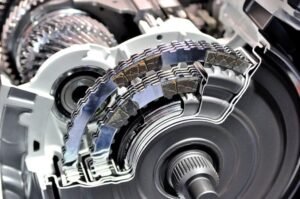
What Does Transmission Fluid In Sudan Mean and Is It Necessary? A Complete Guide Discover More For any vehicle owner or fleet operator in Sudan,
How to Choose the Most Durable Diesel Engine Oil for Sudan Discover More Introduction: The Critical Role of Specialized Lubrication in Sudan’s Harsh Environment In

Best Hydraulic Oils Sudan Construction Equipment: Powering Cranes and Excavators Discover More Sudan’s construction landscape is a dynamic arena of progress, where the relentless rhythm

Best Fuel Injector Cleaner for Sudanese Petrol – AutoCare Guide Discover More At AutoCare, we understand the heart of your vehicle—literally. Every sputter, every hesitant

Definitive Guide to Group III Base Oil Specifications in Sudan Discover More In the heart of Africa’s industrial and automotive landscape, Sudan’s lubricant market is